
I Used to Polish My Wireframes
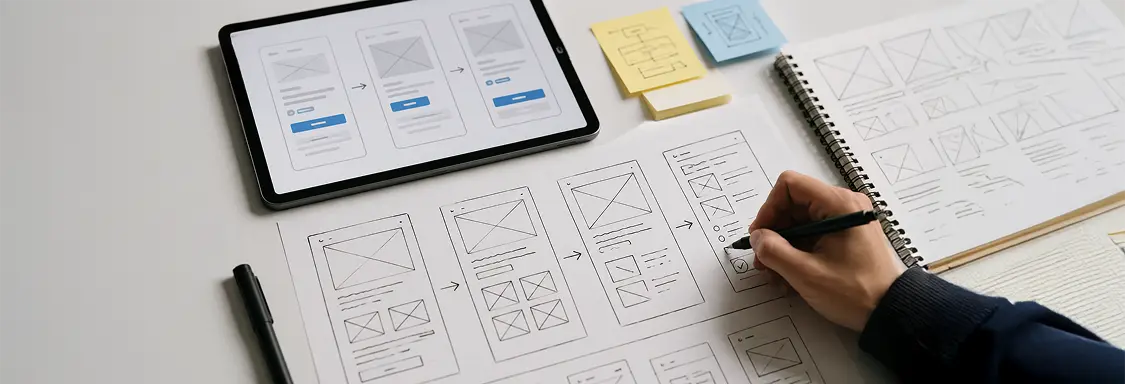
Earlier in my career, I spent a lot of time creating polished wireframes. They looked professional, were carefully aligned, and were easy to present to clients.
Clients generally liked them, but I eventually noticed a problem: they were focusing on the wrong things. Instead of discussing the layout, functionality, and user experience, conversations could shift toward visual details that weren't important at that stage of the design process.
Rough Wireframes Are Easier to Throw Away
Over time, I became more comfortable with the idea that some design work is meant to be temporary. A rough wireframe doesn't need to succeed. It can fail, change completely, or be thrown away without much time being lost. Because I haven't invested hours polishing it, I'm also more willing to experiment and iterate.
With experience, I've learned that knowing when to throw away a design is just as important as knowing how to refine one.
Focusing on Layout and Function
Keeping my early wireframes rough allows me to concentrate on what actually matters at that stage: layout, hierarchy, functionality, and user flow. I'm not worrying about perfect spacing, typography, colors, or visual polish. Those decisions can come later, once I know the underlying experience works.
I Don't Sketch as Much Anymore
Although sketching is useful for quickly exploring ideas, I rarely draw traditional sketches anymore. Modern design tools make it easy enough for me to explore rough layouts digitally while still keeping them intentionally simple.
The tool has changed, but the purpose hasn't. The goal is still to explore ideas quickly without becoming attached to the execution.
One Polished Screen Can Build Confidence
There is one exception to my preference for rough early designs. When working with clients, I sometimes create one polished screen to demonstrate the intended visual quality of the final product. This helps reassure them that the rough wireframes are not representative of what the finished interface will look like.
Once they understand where the visual design is heading, we can return to the rough wireframes and focus on solving the experience itself.
AI Makes Rough Ideas More Powerful
AI has made this approach even more practical. If I need to communicate where a rough concept could eventually go, AI can help transform a simple sketch or wireframe into a more polished visual or even a functional prototype.
That means I can keep early design work intentionally disposable while still being able to communicate a more finished direction when needed.
Ugly Can Be Useful
My wireframes didn't become rougher because I care less about design quality. They became rougher because I've learned where that quality matters most. Early in the process, I want the freedom to fail, experiment, and throw things away. Once the experience works, that's when the polishing begins.